Valorant vs CS2: Which tactical shooter should you play?
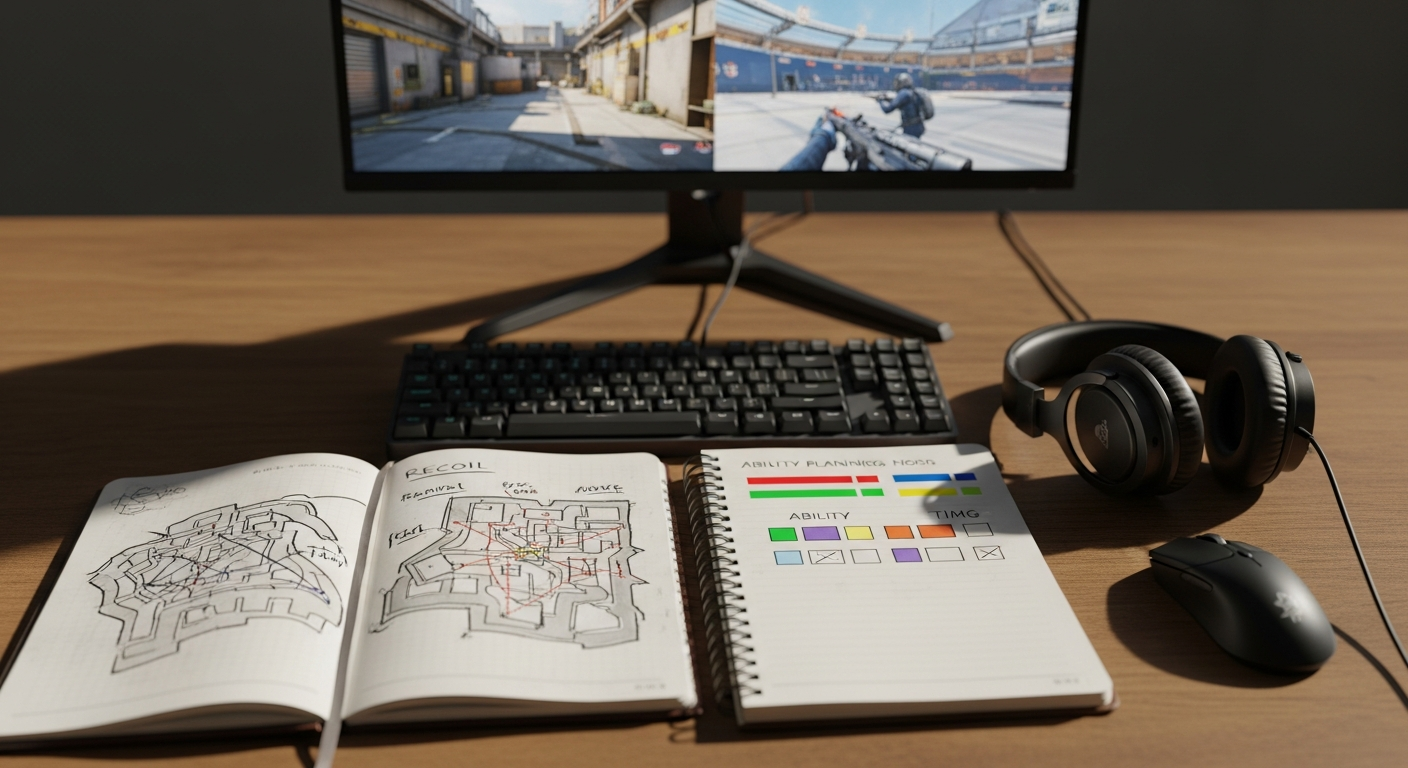
Table of Contents
Valorant vs CS2 gameplay differences
At their core, both titles use a 5v5 plant-defuse round structure that demands precision and strategy at a pace far slower than battle Royal games. Players need to plan their approaches carefully, but the foundational design choices lead to completely different experiences.
Core Gun play Mechanics
CS2 keeps a strict focus on raw gun play, where aiming and recoil control in the Source 2 engine feel punishing at first but reward dedicated practice. VALORANT’s weapon handling is more accessible by comparison, with smoother controls and a more forgiving baseline accuracy that suits a broader range of players.
Abilities vs Traditional Utility
The most fundamental difference between the two games is the utility available to players. Both games revolve around shooting, but they diverge sharply in how teams control the battlefield.
-
Standardized utility in CS2: Every player draws from the same pool of grenades, so map control depends entirely on coordinated team throws and shared economy management.
-
VALORANT agent abilities: Players choose unique characters whose healing, reconnaissance, and movement tools change round pacing and introduce ability-driven strategy.
The choice between these systems comes down to what kind of challenge you prefer. Do you want the mechanical purity of classic tactical gameplay, or a dynamic environment that rewards creative character synergies?
Valorant vs CS2 difficulty curve
Looking at the VALORANT vs CS2 difficulty curve means considering both the initial barrier to entry and the long-term skill ceiling. Newcomers often wonder which title demands more immediate mechanical skill and which requires deeper strategic understanding. Both share common tactical elements, but their learning curves split apart after the first few dozen hours.
Visual Clarity and Initial Accessibility
For new players, VALORANT’s beginner-friendly mechanics and vibrant art style make enemy outlines easy to distinguish. CS2’s gritty realism can make target identification harder for untrained eyes. And while mastering CS2’s precision aiming takes dedicated offline practice, VALORANT’s forgiving accuracy lets newcomers find their footing much faster.
The Evolving Skill Ceiling
Reaching the top ranks tells a completely different story. Mechanical purity defines the high-level Counter-Strike experience.
Streamer and former professional player Shroud went through a notable shift in how he assessed both games. He initially said VALORANT was easier to pick up, but after spending time playing CS2 at a professional level, he reversed that view, arguing that CS2 is actually easier than VALORANT at the highest competitive level. That reversal makes sense when you look at what players have to track mentally during a high-stakes match.
Mastering either game involves distinct cognitive challenges that grow as you climb the ranks.
-
Predictable variables in CS2: Standardized utility and movement mechanics mean players always know exactly what tools the enemy team has, which simplifies tactical predictions and lets players focus entirely on aim.
-
Dynamic combinations in VALORANT: Tracking agent abilities, ultimate orbs, and cooldowns introduces many variables into every round.
-
Recovery from mistakes: Counter-Strike lets skilled players escape bad situations if they have mastered their weapon sprays, while the unpredictable nature of hero abilities often makes positional mistakes instantly fatal in VALORANT.
Players who want a gentler visual start may prefer VALORANT’s accessible shooting, while those who enjoy mastering strict mechanical patterns will feel at home in Counter-Strike’s structured environment.
Valorant vs CS2 maps and weapons
Understanding the differences between Valorant vs CS2 maps and weapons helps players choose the right tactical environment for them. Both titles feature in-game economies where teams manage limited funds to buy gear, and both have active markets for cosmetic weapon skins. Even so, the way players interact with environments and use their arsenals reflects completely different design philosophies.
The CS2 Weapon Pool and Gun Realism
Valve built Counter-Strike around a high gun play focus that prioritizes mechanical mastery and realism. Players work through a specific weapon pool that shapes how engagements play out across realistic map locations running on the Source 2 engine.
-
Pistols: Used mainly during early economy rounds, offering precise single-fire damage for close engagements.
-
Rifles: The primary combat tools, requiring extensive practice to master their recoil spray patterns.
-
SMS: Provide mobility and rapid fire for fast map executions or holding tight angles during anti-economy rounds.
-
Heavy weapons: Useful for holding narrow choke points with sustained firepower.
Unlike VALORANT’s shared gun roster across all agents, CS2 has side-specific buys for Counter-Terrorists and Terrorists, which adds complexity to the economy and map callouts.
Ability-Influenced Combat and Map Control
Riot Games takes a different approach. Rather than standardized grenades, VALORANT gives each agent unique tactical abilities to block sightliness, reveal enemies, and control the map.
Navigating VALORANT’s maps means constantly balancing weapon usage with active ability cooldowns, whereas CS2 demands pure mechanical discipline.
Valorant vs CS2 community and player base
Both tactical shooters attract large, dedicated global audiences drawn to methodical pacing and team coordination.
Audience Demographics and Accessibility
Riot’s hero shooter naturally draws a highly active casual audience, offering immediate fun and a colorful aesthetic that keeps things visually clear.
Counter-Strike has a deeply entrenched, hardcore community made up heavily of veterans. Its competitive culture and solo queue experience reflect a long history of demanding mechanical standards.
Viewership and Community Scale
Exact daily active user counts are closely guarded, but peak viewership figures give a clear sense of overall community scale. CS2 recently peaked at 2,748,434 concurrent spectators. VALORANT maintains a slightly smaller but loyal following, with a peak viewership of 1,687,848. These numbers give new players a sense of how many active participants are available for matchmaking, community discussions, and content creation.
Valorant vs CS2 esports scene
The CS2 vs VALORANT esports ecosystem sits at the top of modern competitive gaming. Both tactical shooters draw large global audiences, but their organizational structures are entirely distinct. Players who want to follow professional matches, or who aspire to compete, will find two very different paths. Knowing how these formats work helps fans track storylines and helps players aiming to enter amateur circuits understand what they’re getting into.
The VALORANT Competitive Scene Structure
Riot Games built the VALORANT competitive scene around a regulated, partnered league system managed directly by the developer. This centralized approach keeps production value high and broadcasting schedules consistent throughout the year. The professional tier is divided into specific international leagues, including a recently established China league, which regionalizes competition to build local fan bases. Top rosters from these regional hubs earn spots at international events known as Valorant Masters. The season culminates in Valorant Champions, a year-end tournament that crowns the global winner.
CS2 Traditional Tournament Format
Valve takes a notably hands-off approach, letting third-party organizers run a traditional tournament structure with open formats. This open-circuit model has a long history in competitive gaming, famously giving underdog teams a chance to qualify for major events through open brackets. The Counter-Strike calendar is packed with independent circuits, including BLAST Premier, ESL Pro League, and the CCT Global Finals. Because of this decentralized format, competition stays constant and varied throughout the year.
Which professional scene you invest time in largely depends on your viewing preferences. Riot offers a streamlined, easy-to-follow season with clear off-seasons, while the Counter-Strike circuit provides a historically rich and continuously active landscape driven by independent organizers.
Valorant vs CS2 graphics and performance
Players switching between these two shooters will immediately notice two completely different visual philosophies. The choice between realism and a stylized look affects not just how environments look, but also the hardware needed to run the game smoothly. For competitive players focused on frame rates and input lag, performance optimization matters a lot.
Visual Style and Engine Differences
CS2 uses a realistic, gritty aesthetic powered by the updated Source 2 engine, which brings advanced lighting, dynamic utility effects, and detailed textures to the map pool. VALORANT goes in the opposite direction, using a vibrant, stylized look that puts visual clarity ahead of environmental realism. That approach keeps agent abilities and enemy outlines sharp against the background, which makes visual processing easier during chaotic site executions.
Hardware Requirements and Frame Rates
CS2’s detailed environments and sub-tick architecture require powerful hardware (such as an Intel Core i7-12700K or AMD Ryzen 7 5800X) to hold 144+ FPS. Riot designed VALORANT to run efficiently on a wider range of setups, keeping it accessible while maintaining stable frame rates.
Valorant vs CS2 anti-cheat systems
Keeping competitive integrity intact is a top priority for both developers. Cheaters ruin the match experience fast, which is why Riot Games and Valve have each built distinct security systems. Understanding how each company handles unauthorized software gives players a sense of the fair play they can expect.
The VALORANT Vanguard System
VALORANT’s anti-cheat, Vanguard, runs at the kernel level from system boot. This deep integration lets it detect sophisticated tools proactively, which generally delivers a secure ranked experience, though it has raised some user privacy concerns.
CS2 VAC and Overwatch Systems
Counter-Strike 2 uses Valve Anti-Cheat (VAC), a user-level scanner, alongside the community-driven Overwatch system. This two-layer approach catches obvious infractions through veteran replay reviews without requiring kernel-level access to the operating system.
The choice comes down to accepting deep system integration for tighter security versus a less invasive method backed by community moderation. Both developers continue refining their systems to protect competitive integrity.
Which should you play first?
Where you start in the tactical shooter genre depends heavily on what you want from the game mechanics and matchmaking. Both titles offer solid entry points, but they suit different types of players. Thinking about what you want from your first hours will help you pick the right one.
Starting with VALORANT
If you prefer abilities and strategic depth over pure gun play, VALORANT is the natural starting point. Distinct characters with unique utility make it engaging for players who enjoy building team compositions and executing complex site takes. New players can contribute through effective utility usage even while still developing their aim and crosshair placement, which makes the early experience far less punishing.
Beginning your CS2 Journey
Counter-Strike 2 makes sense for players who want a mechanics-driven arena with no ability layer. When you first boot it up, you face a choice between two matchmaking environments. Standard Competitive mode is a good training ground for learning individual maps without risking a rank while you’re still figuring out the game. Once you build confidence and get Prime status, Premier mode offers a pro-like experience with a single global rating across all maps, seasonal leaderboards, and consistent ranking progression.
Your first game should match whether you want to master deep character interactions or focus on map knowledge and weapon mechanics.
Post Comment