How to Unlock Premier CS2
Table of Contents
What is Premier mode in CS2?
Premier mode is CS2’s esports-style global ranking system and the main competitive matchmaking format alongside standard Competitive mode. It offers a structured environment that closely mirrors professional play by following the latest competitive rulesets.
The system uses the CS2 Premier Rating to measure your skill level and place you on the global leaderboard.
Every match you finish affects this score directly. Premier mode attracts a dedicated player base and requires Prime Status, which generally results in better matchmaking quality and the closest experience to professional CS2 play.
How to unlock Premier CS2?
Getting into CS2’s top matchmaking takes a few specific steps, mostly to keep match quality high and discourage smurfs and cheaters. You’ll need to buy a premium account upgrade and put in some time learning the basics.
Purchasing Prime Status
First, you need to upgrade your account. Buy Prime Status directly through the Steam store: open Steam, go to the Counter-Strike 2 page, and purchase the upgrade. It unlocks matchmaking access and also gives you weekly rewards like cosmetic skins, weapon cases, and graffiti.
Achieving Profile Rank 10
Buying Prime Status alone doesn’t open the leaderboard right away. You also need to reach Profile Level 10, which you do by earning XP across casual and standard game modes. Getting there means you’ll have a handle on basic mechanics, map layouts, and weapon behavior before jumping into a competitive queue.
Completing Your Placement Matches
Once you have Prime Status and hit Level 10, you can queue for Premier. Go to the main menu, click Play, and select the Premier tab. To get your actual CS Rating, you need to win 10 matches in this queue. Those wins complete your placement matches and reveal your position on the worldwide leaderboard.
How much does Prime Status cost?
Prime Status is a one-time purchase through the Steam store. In the United States, it costs $14.99 USD. Once you buy it, it’s permanently tied to your Steam account with no subscription fees.
The base game is free, but this purchase acts as a barrier against cheaters and alt accounts in higher-level games. Depending on where you live, the price may vary slightly because of regional pricing and currency rates set by Valve.
Buying Prime gives you lifetime access to weekly drops and the competitive queues. If you sell the weapon cases you earn on the Steam Community Market, you can often recover the cost within a few months. For anyone serious about competing, it’s a necessary step.
How to reach Level 10 fast?
Reaching Level 10 in CS2 comes down to knowing how the XP system works. Most new players get there in 5 to 10 hours of actual gameplay, which usually takes two to three weeks at a steady pace. That timeframe also lines up well with the weekly XP bonus resets, which give a significant boost to how fast you level.
Rather than grinding for hours in one sitting, focusing on the right game modes makes a real difference. Death match is the best option for earning XP quickly. The fast pace means more kills in less time, and those kills convert directly into XP at the end of each round. Casual matchmaking works too, but Death match’s instant respawn keeps you in the action constantly, which adds up faster. Winning consistently in either mode speeds things up further.
Plan your sessions around the weekly bonus resets, and you’ll hit Level 10 without much wasted time.
How many wins for Premier placement?
Once you’re in Premier, you go through a calibration phase before getting an actual CS Rating. You need exactly 10 wins to complete it. Since the system only counts victories, how many total matches it takes depends entirely on how often you win.
During these placement matches, games follow the CS2 MR12 format, where you need 13 round wins to take the match. If the score reaches 12–12, the game goes to overtime, where a team needs to win four of six rounds to claim victory.
After your tenth win, the game assigns your starting rating, and you’re officially on the leaderboard.
What blocks Premier access?
Even if you know the requirements, a few things can still stop you from queuing.
-
Missing Prime Status: Without it, Premier stays locked regardless of anything else.
-
Insufficient Profile Level: You need to be at least Profile Level 10 before the queue becomes available.
-
Server Outages: When CS2 servers go down, matchmaking is unavailable until they’re back online.
-
Account Penalties: A VAC ban blocks Premier access entirely.
Fixing whichever issue applies to your account will get you back into the queue. For temporary outages, you just have to wait.
How does CS Rating work?
CS Rating is a visible score that shows where you stand in competitive play. Unlike the hidden matchmaking numbers from older CS titles, this one updates after every match and shows your exact position on both global and regional leaderboards.
A few mechanics determine how the number moves:
-
Placement Phase: You need 10 wins before the system generates a baseline score and places you on the leaderboard.
-
Rating Tiers: There are seven tiers, each defined by numerical milestones, which group players for balanced matchmaking.
-
Inactivity Rules: If you take a long break, your score gets hidden and your leaderboard position disappears. One win brings it back.
Playing regularly keeps your rating visible and up to date, making it easier to track where you actually stand.
What happens in Premier matches?
Premier matches work differently from standard competitive. Specific rules govern map selection, round counts, and rating changes to keep things fair.
The Map Veto Phase
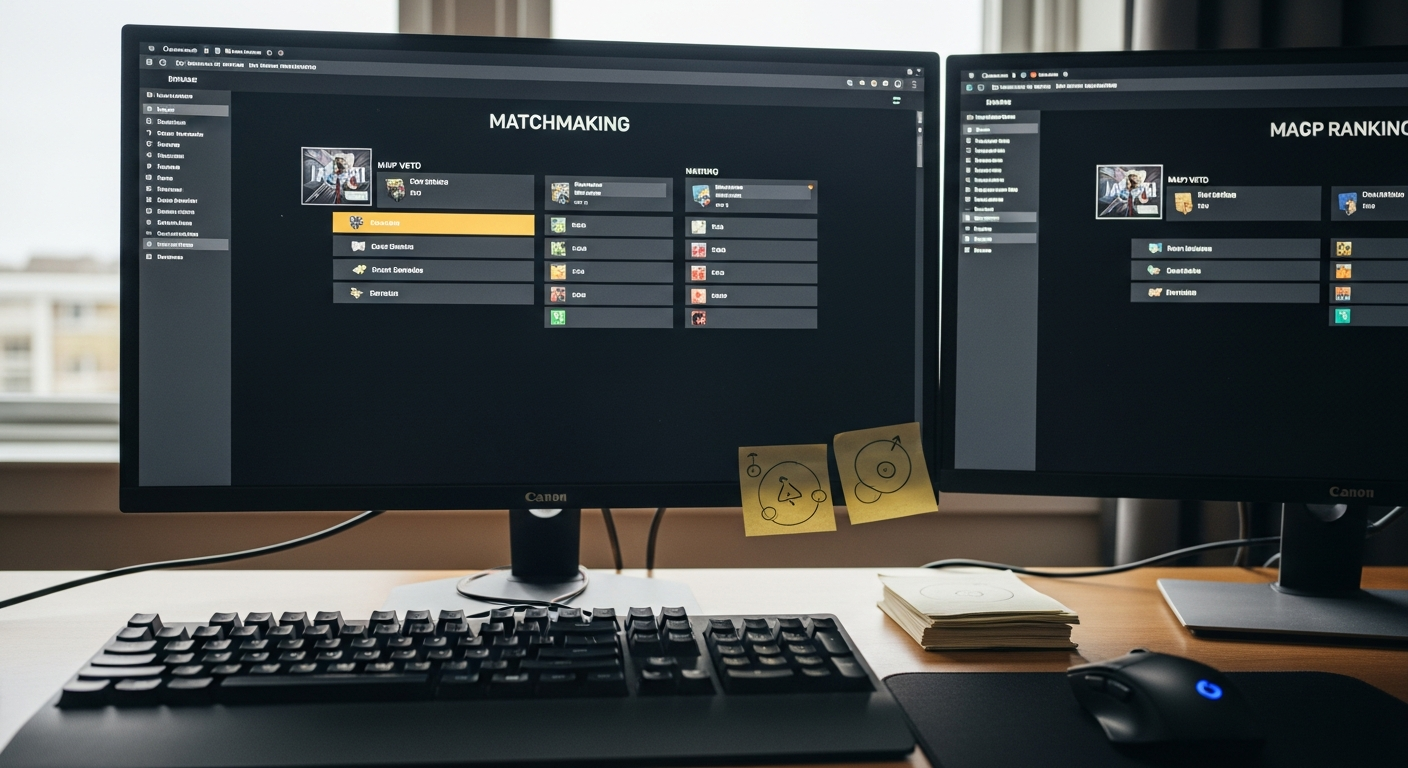
Instead of picking a map directly, both teams go through a veto phase using the active map pool. Captains take turns banning maps until one remains. This means you can’t just rely on one map you’re comfortable with; you need to be ready for several.
Match Format and Economy Rules
Matches use the CS2 MR12 format, so you need 13 round wins for a standard victory. Economy management matters throughout, especially when things go sideways.
-
Economy Adjustments: If a teammate disconnects for at least 3 rounds, the remaining players get a $1,000 bonus at the start of each round (excluding pistol rounds 13 and 14) to help them stay competitive.
-
Standard Overtime: A 12–12 tie sends the match to overtime, where teams play up to six more rounds. Winning four of those six takes the match.
-
Draw Conditions: If overtime ends at 15–15, the match is a draw. This keeps games from going on indefinitely.
Knowing these rules and adjusting to them mid-match is what separates solid players from average ones.
Promotion and Relegation Dynamics
Your rating movement at key thresholds triggers special match designations. If a win could push your score past a 5,000-point interval, it becomes a Promotion Match. If a loss could drop you below one, it’s a Relegation Match. Both add real pressure to moments that already matter.


Post Comment