CSGO vs CS2: differences in gameplay, performance, and features
Table of Contents
CSGO vs cs2: what changed?
When Counter-Strike 2 launched, Valve replaced CS:GO in the store entirely rather than releasing a separate sequel.
All player stats and inventory items carried over to the new title. Moving to the Source 2 engine let developers rebuild core mechanics that hadn’t been touched in a decade, with major changes to visuals, audio, and competitive structure.
Returning players will notice the differences almost immediately, especially in how the environment reacts and how the game communicates information. Several areas were completely reworked.
-
Dynamic Environments: Smoke grenades now work as 3D volumetric objects. The clouds interact with map geometry and temporarily clear when hit by gunfire or explosions.
-
Interface Overhaul: The HUD got a full visual redesign, with new effects that clearly show important game states like health warnings and round timers.
-
Audio Fidelity: Better sound quality and more detailed audio settings help players read critical cues accurately, including enemy positions and weapon types.
-
Competitive Structure: The ranking system moved away from a single progression path. Players now have two separate rank types, Competitive and Premier, each offering a different way to climb.
Getting familiar with these Source 2 upgrades matters if you want to adapt to the current meta. Each change pushes players to drop old habits and build new tactical approaches from scratch.
CSGO vs cs2 gameplay differences
Switching to CS2 brings immediate changes to how the game feels moment to moment.
The core experience will still feel familiar to veterans, but Counter-Strike 2 introduces more realistic shooting mechanics. The main gameplay differences come down to weapon handling, performance adjustments, and matchmaking.
Gun play and Dynamic Settings
Developers focused on keeping traditional Counter-Strike gun play intact while modernizing how it feels in practice. Shooting has a more realistic sense of weight now, and recoil management matters more during extended firefights.
To help players fine-tune their visual setup, advanced video settings now work dynamically. You can preview changes in real time directly from the menu, so there’s no need to keep loading into offline servers just to check how a shadow or texture tweak looks.
The cosmetic economy also carried over without any changes. All cases from CS:GO remain fully compatible and work exactly the same way in CS2.
Map-Specific Progression
How players queue for matches has changed too. In standard Competitive mode, there’s no longer a single global rank. Instead, you earn a separate rank for each map, which unlocks after winning exactly 2 matches on that layout. It pushes players to learn callouts and strategies across the full active duty pool rather than grinding the same map over and over.
These changes make CS2 feel like a more deliberate tactical shooter overall. The upgraded engine means that every decision, and every hardware adjustment, has a direct impact on competitive performance.
sub-tick input system
Counter-Strike 2 introduces a sub-tick server system that completely changes how player actions are recorded.
Rather than waiting for the next predefined server interval to register a command, the new architecture captures actions between ticks with much greater precision. Shooting, moving, and throwing grenades all respond with minimal delay. The engine calculates the exact fraction of a second when an action occurs and synchronizes with it, independent of the standard tick rate.
This shift in network processing makes gameplay noticeably smoother and more responsive. Players no longer have to worry about a critical shot or a precise grenade lineup getting lost in a server update window. Because the server registers the exact moment an action happens, the outcome of firefights is more consistent and fair for everyone involved.
CSGO vs cs2 performance comparison
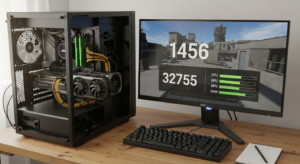
Moving to a new engine brings real changes when comparing CS:GO and CS2 performance. Valve made several Source 2 upgrades that change how the game uses system resources. Server performance improves and gameplay runs more smoothly, particularly on newer hardware. That said, the game also demands significantly more from your machine than CS:GO ever did.
Frame rate and System Demands
Players on older hardware will feel the difference right away. CS2’s system requirements are substantially higher, so on identical specs, it tends to run at lower frame rates than CS:GO did. The new version is much better optimized for modern multicore processors and current graphics cards, but older or budget rigs struggle to hit the high frame rates that competitive players depend on. Upgrading core components is often necessary to get smooth performance in matches.
Storage Capacity Increases
Storage requirements also jumped considerably. CS:GO had a relatively small footprint of around 15 GB. CS2 needs 85 GB of free space. That increase comes from high-resolution textures, updated audio files, and the engine assets that underpin the whole experience.
In short, the updated engine trades low-end accessibility for better performance on modern systems. Players with up-to-date hardware will notice a more responsive game; those on older rigs may need to upgrade before they see the same benefit.
CSGO vs cs2 graphics and visibility
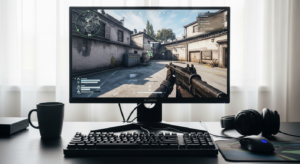
The visual difference between the two games is one of the first things players notice when they launch CS2. The Source 2 engine brings realistic lighting, detailed textures, and improved water effects. The result is a grittier, more grounded look that still feels familiar to anyone who spent time in CS:GO.
Visual Enhancements and Weapon Skins
The engine update brings new player models, redesigned weapons, and rebuilt environmental lighting across the classic maps. Physically based rendering means assets react naturally to light sources, and everything looks noticeably sharper as a result. Your existing inventory benefits from this too. Developers made sure that lower-tier skins received visual improvements in CS2, so older or cheaper cosmetic items look considerably better than they did before.
In-Game Visibility Mechanics
Beyond the visual overhaul, some mechanical changes also improve what you can actually see during a match. One long-requested feature that returned is the ability to switch your weapon view model between the left and right side of the screen. Moving the weapon out of the way gives you a clearer view when holding tight angles or clearing corners.
Together, the engine upgrades and these practical visibility tools make CS2 feel more immersive. You get a better-looking game and a cleaner screen during the moments that matter most.
dynamic smoke grenades
Volumetric smoke is one of the biggest tactical changes in CS2. Unlike the flat, static clouds in CS:GO, dynamic volumetric smoke grenades actively interact with the environment. The gas expands to fill corridors, seeps under doors, and conforms to the surrounding geometry.
These smokes also react to what happens around them mid-round, which opens up new tactical options during active firefights.
-
Lighting interactions: The clouds absorb and reflect nearby light sources, producing realistic shadows and affecting visibility differently depending on the map location.
-
Gunfire reactions: Shooting through the edge of a cloud carves out a temporary visual tunnel, letting alert defenders spot pushes coming through the smoke.
-
Explosive dissipation: An HE grenade detonated inside the smoke radius clears the gas briefly, giving attackers a sudden line of sight.
This redesign forces teams to rethink how they approach map control. Holding a smoked-off choke point now carries real risk, since opponents can open sightliness quickly with a well-placed explosive or concentrated rifle fire.
CSGO vs cs2 round format
Moving from CS:GO to CS2 also changes how long competitive matches last. Valve replaced the old MR15 structure with the MR12 system, which had been the standard in both professional and casual play for years. Capping each half at 12 rounds changes the pacing and economic strategy of every match.
Under the old rules, teams played up to 15 rounds per half and needed 16 total round wins to take the map. MR12 caps each half at 12, so the first team to reach 13 wins. Both Competitive and Premier modes use a best-of-24-round structure. In Premier, if the score reaches 12–12, overtime kicks in to decide the winner.
Needing 13 rounds instead of 16 to close out a map means matches end faster. It also puts more pressure on economic management, since dropping consecutive pistol and anti-eco rounds costs a much larger share of the half. Early momentum matters more, and there are fewer opportunities to recover from a slow start without careful buying.
Bringing the format down to 24 rounds moves the standard competitive experience closer to what modern tactical shooters typically offer. Matches are shorter, but the strategic depth the franchise is known for stays intact.
CSGO vs cs2 UI and buy menu
Switching from CS:GO to CS2 brings noticeable changes to how you interact with the game. Valve rebuilt the user interface from the ground up to improve clarity and modernize the look. These changes run across the entire display, making key information easier to read when things get hectic.
HUD visual updates
The updated HUD includes new visual effects that do more than just look different. The overlays actively communicate game states, reacting to match events so you always know your combat status at a glance, without having to hunt around the edges of the screen for it.
Streamlined purchasing system
The buy menu also got a full redesign. The old radial wheel is gone, replaced by a flat layout that shows all items at once. Every weapon category is visible immediately, and anything can be selected with a single click. Cutting out the nested menus makes the whole process faster and easier to navigate under pressure.
These changes make the interface feel intuitive for both veterans and new players. A cleaner layout keeps your attention on the game rather than on figuring out the menus.
CSGO vs cs2 ranking systems
CS2 changes how player progression works in a meaningful way. CS:GO used a single ranking structure across core matchmaking, but the CS2 ranking system splits things into two separate paths. Players choose between Premier and Competitive, and each mode tracks skill through a different method.
Premier mode and CS Rating
Premier mode uses a numerical system called CS Rating, a single ELO-based number that determines your position on global and regional leaderboards. You need to win 10 Premier matches to earn a visible rating. This is a clear departure from CS:GO, where the Premier queue used the standard Competitive rank, which stayed hidden from non-friends until the match ended. The CS Rating makes skill gaps and match balancing immediately visible on the leaderboard.
Competitive mode map-based ranks
Standard matchmaking was restructured too. Rather than assigning one overall skill group, CS2 gives you a separate rank for each active-duty map. You might be highly ranked on Mirage but sitting much lower on Vertigo. Earning a rank on any given map requires exactly two wins there. Each map uses its own hidden MMR, so you can learn new maps without putting your standing on familiar ones at risk.
CSGO vs cs2 audio and map updates
Moving from CS:GO to CS2 brings significant changes to both sound and map design. The Source 2 engine rebuilds the acoustic feedback and environmental layouts, and even though CS2 functions in many ways as a large update to the original game, the audio and visual environments feel like a fresh start. Players notice the differences quickly, both in how they pick up on threats and how they move through familiar locations.
CSGO vs CS2 sound improvements
In a tactical shooter, what you hear shapes how you play. CS2 delivers noticeably clearer footsteps and more distinct gunfire compared to CS:GO. Developers added more detailed sound settings alongside the improved audio quality, making it easier to read critical cues on the fly. The upgraded system helps players pinpoint enemy positions and identify weapon types without needing to see anything first.
Touchstone and Upgrade map classifications
To bring CS:GO maps into CS2, developers split the active pool into two modernization categories. Touchstone Maps are classic layouts that received baseline improvements to lighting and character readability. Their structure stays the same as before, which makes them useful for evaluating how the core gameplay changes feel without other variables getting in the way.
Upgrade Maps go further, using the full capabilities of Source 2. These environments use physically based rendering to produce realistic materials, accurate dynamic lighting, and lifelike reflections. Because these visual changes affect contrast and brightness noticeably, it’s worth checking your crosshair settings to make sure it stays visible against the new textures.



Post Comment