Most Expensive CS2 Skin: The Rarest and Highest-Value Items in 2026
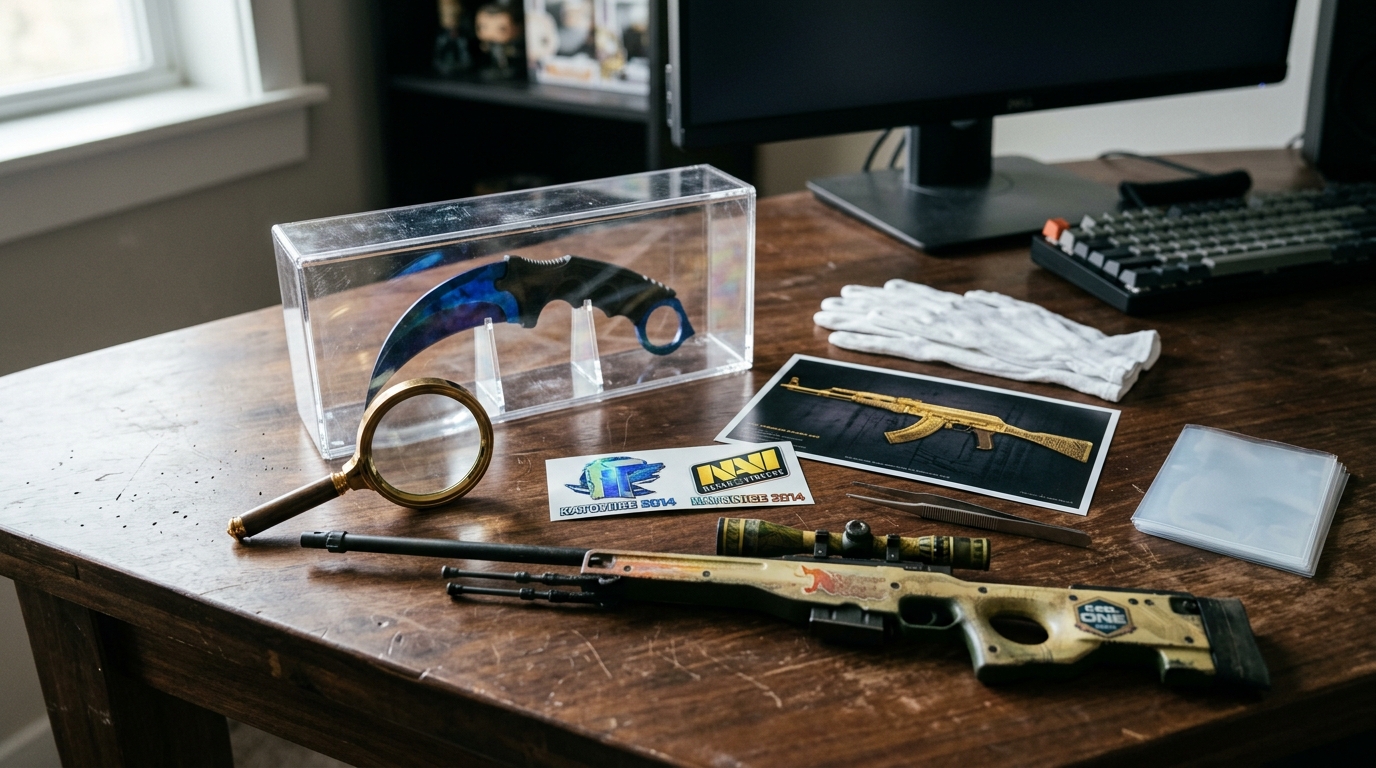
Table of Contents
What makes a CS2 skin expensive?
To understand why digital cosmetics can cost as much as a house, you have to look at how supply and demand work inside the game’s economy. The move to the Source 2 engine brought major visual improvements, making high-end skins noticeably more vibrant and detailed. A growing global player base has pushed demand upward, but the real driver behind the biggest price tags is scarcity, plain and simple.
Rarity is the primary price factor. It determines whether something trades for a few dollars or rivals the cost of a luxury home.
The highest valuations appear when multiple layers of rarity stack on top of each other. A weapon finish that’s already uncommon becomes exponentially more valuable once you factor in specific conditions. Collectors hunt for combinations that are mathematically almost impossible to unbox in 2026. Market experts point to three main ways rarity stacks to create serious value:
-
Pattern scarcity: Some finishes have hundreds of visual variations. Blue Gem variants of Case Hardened skins display maximum blue coloring, making them extremely hard to unbox and highly sought after by traders.
-
Discontinued status: Items permanently removed from the drop pool become strictly finite. The M4A4 Howl received a unique Contraband classification, so the community will never generate new copies.
-
Exclusive tournament drops: Souvenir AWP Dragon Lore units with rare Katowice 2014 stickers combine a discontinued collection with highly sought-after applied decals, making them a perfect storm of scarcity.
When these elements combine, the results are record-breaking valuations. The Factory New Karambit Case Hardened Pattern #387, for example, is currently priced at over $2.5 million, making it the most expensive CS2 skin available. Numbers like that prove that CS2 skin prices depend far more on historical context and mathematical scarcity than on aesthetics alone.
Which CS2 skin is worth the most?
The most valuable CS2 skin in 2026 is the Karambit Case Hardened Pattern #387, widely known as the ultimate blue gem the game has to offer. A flawless Factory New version carries an estimated value of over $2.5 million. Even in lesser condition, Pattern 387 commands around $1.5 million. That price is driven first and foremost by the sheer statistical improbability of unboxing this exact pattern seed.
Add a pristine Factory New float value on top of that, and the rarity becomes almost incomprehensible.
Just below the Karambit, other high-end skins compete fiercely. Souvenir AWP Dragon Lore units with rare Katowice 2014 hold stickers routinely fetch hundreds of thousands of dollars and carry serious weight in overall CS2 skin rankings. For traders looking to enter the top tier of knife collecting, the Skeleton Knife Slaughter is often cited as a starting point, offering a strong visual without the multi-million dollar barrier of Pattern #387.
The gap between the top and the bottom of this market is enormous. The P250 Sand Dune, for instance, often costs just a few cents. Yet budget options still have their appeal: skins like the MAC-10 Candy Apple or USP-S Pyrex look great in the Source 2 engine and keep the broader community active. The $2.5 million Karambit, though, remains the definitive benchmark for what rare CS2 skins can be worth.
Top expensive CS2 skins ranked
At the top of CS2 skin rankings, the hierarchy is built on stacking extreme rarity modifiers. Factory New float values, discontinued item pools, and coveted applied stickers combine to push certain items into a tier of their own. A handful of skins dominate the apex of the market, and the gap between them and everything else is significant.
-
Karambit Case Hardened (Blue Gem Pattern 387) – Estimated at over $2.5 million, this knife owes its value to a nearly perfect blue play side. It’s the top target for collectors who want the rarest asset in the game.
-
AK-47 Case Hardened (Pattern 661) – This rifle holds the record for a confirmed cash sale of over $1 million, driven by near-full blue coverage on the receiver and the presence of Katowice 2014 Titan Hold stickers. Investors favor it because the transaction data is verified rather than estimated.
-
Souvenir AWP Dragon Lore – Combining a discontinued map collection drop with ultra-rare tournament stickers, this sniper rifle commands hundreds of thousands of dollars. It’s both a visual statement and a historically significant piece.
-
M4A4 Howl – The only item ever permanently removed from standard cases due to a copyright dispute, its Contraband status means supply is frozen forever. Completions treat it as a mandatory piece of any historically complete inventory.
Market conditions shift constantly based on community interest and the broader economy, but items that stack multiple rarity elements tend to hold their positions at the top of the trading world.
Karambit Case Hardened Blue Gem
The Karambit Case Hardened Factory New, specifically Pattern 387, sits at the top of the CS2 knife tier list without serious competition. Introduced with the Arms Deal collection in 2013, this knife is known for displaying a distinct blue hue across virtually the entire blade. Finding a true blue gem pattern is extraordinarily rare: the best variants have an estimated 1 in 371 million chance of dropping from a weapon case.
Standard Case Hardened Karambits trade between $651.98 and $4,674.55 depending on wear and pattern quality. A genuine blue gem puts the item in a completely different financial bracket. Top-tier versions start at $1,000,000 to $1,500,000, and Pattern 387 pushes well past that, with current valuations exceeding $2,500,000. At that price, it stops being a cosmetic and becomes a serious investment asset, and for whoever holds it, an unambiguous status symbol.
AK-47 Case Hardened #661
Also from the Arms Deal 1 collection (2013), the AK-47 Case Hardened #661 is widely considered the second most expensive item in the game. A pristine version is valued at approximately $1,500,000, placing it alongside the finest knives in terms of raw market position.
Pattern index 661 is commonly called the Scar Pattern. It earns that reputation by providing nearly full blue coverage across the weapon receiver, making it the rarest AK-47 Blue Gem available. Most Case Hardened drops show dull gold or silver surfaces, so finding one with consistent blue coverage is a genuine statistical anomaly.
Even heavily worn examples of the #661 start around $30,000. The ceiling climbs much higher when Factory New float values or historic tournament stickers enter the picture. One well-known transaction involved a #661 with four Katowice 2014 Titan Hold stickers that reportedly sold for over $1,000,000, illustrating exactly how much a premium pattern index can dictate price at the top of the market.
Souvenir AWP Dragon Lore
The Souvenir AWP Dragon Lore is one of the most recognizable skins in the game, instantly identified by its golden, fire-breathing dragon motif. This variant came exclusively from Cobblestone Souvenir packages, awarded to viewers during professional Major tournaments. Since the Cobblestone map is no longer part of the active competitive rotation, no new packages are being generated. The supply of unopened cases is fixed, and that’s not changing.
Scarcity drives the price directly. Only around 12 Factory New versions are known to exist worldwide. Every souvenir drop comes with exclusive tournament and team stickers already applied, giving each individual piece its own historical context. A standard souvenir model typically sells for $100,000 to $227,000, with copies in excellent condition regularly exceeding $150,000.
When condition and sticker quality align, valuations climb further. A Factory New version with signatures from notable professionals carries an estimated value of $300,000 to $400,000. In certain private sales involving flawless float values and ideal sticker placements, the price has exceeded $500,000. Acquiring one of these dozen pristine rifles requires serious capital.
M4A4 Howl and Contraband status
The M4A4 Howl occupies a position no other skin shares: it’s the only Contraband item in existence. Its history traces back to a copyright dispute over the original artwork, which forced developers to pull the weapon from active cases entirely. Rather than removing it from existing inventories, Valve reclassified its rarity to Contraband. The supply has been frozen ever since, and no new copies can ever be unboxed.
That permanent supply cap makes it a cornerstone of any serious collection. The fixed quantity drives intense demand, pushing the M4A4 Howl into the upper tier of the gaming economy. Stature Factory New versions carry the steepest premiums due to their extreme scarcity. Paired with elite historical stickers, such as four Katowice 2014 burrower (Hold) stickers on a Stature Factory New copy, the weapon becomes one of the most valuable CS2 skins available.
Because the Contraband rarity tier belongs exclusively to this one firearm, it’s an irreplaceable piece of gaming history. A real-world legal dispute combined with a permanently locked supply ensures it will always be a top-tier target for serious investors.
Premium knives and gloves
Beyond standard firearms, many of the most valuable CS2 skins come from the Rare Special Item category. Unboxing one requires both luck and capital. Knives and gloves sit at the Gold tier, which has a drop rate of just 0.26%, roughly 1 in 385 cases. That baseline scarcity is what justifies their prices before any other factor is considered.
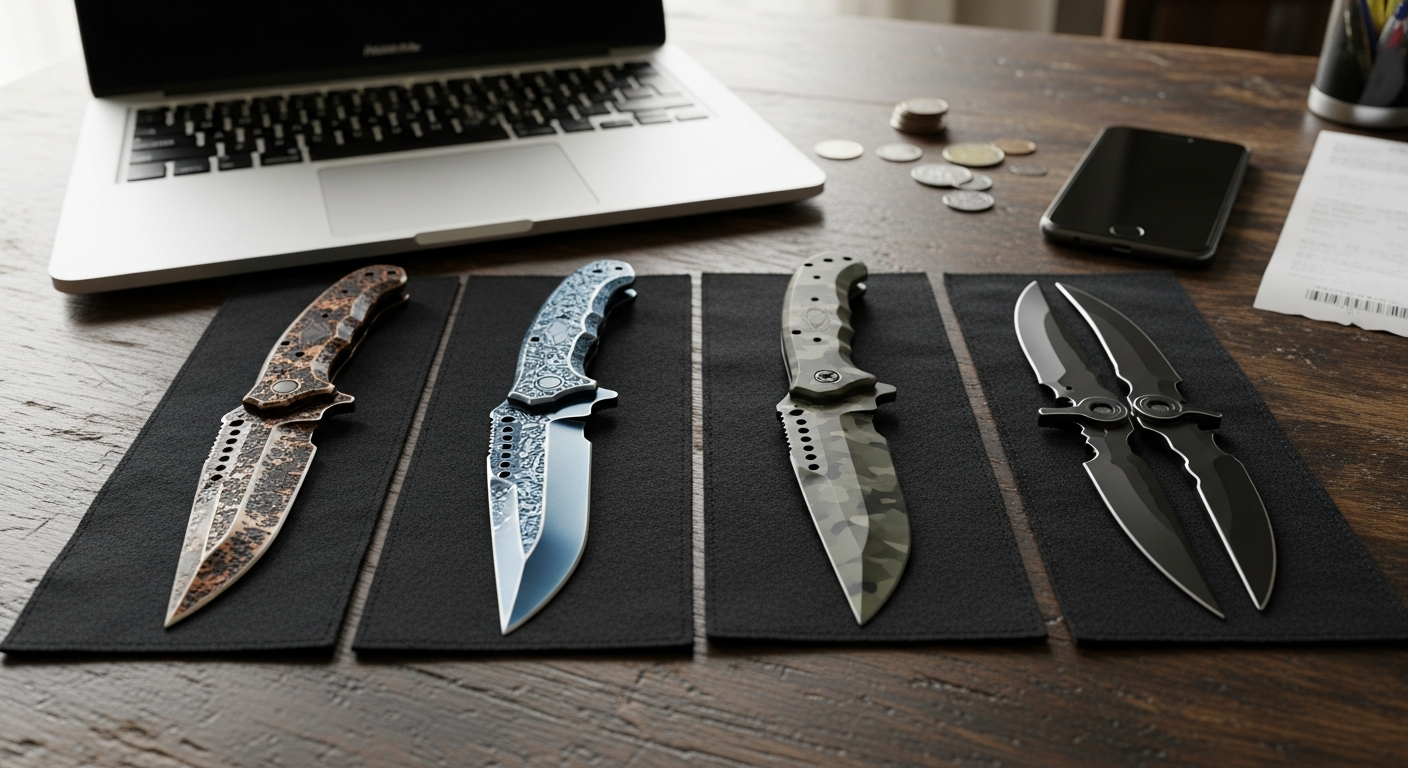
Serious investors track the CS2 knife tier list closely to identify the most sought-after variations. Within this bracket, Butterfly Knife Doppler Gems are among the most coveted, combining distinctive inspect animations with vivid color palettes. Collectors who want a complete loadout often pair these knives with equally high-end gloves, matching color schemes between a Factory New glove finish and a gem pattern to create a unified look that commands top prices.
The 0.26% drop rate isn’t going anywhere, which means knives and gloves will continue to rank among the rarest and most expensive items in the game. For anyone navigating this part of the market, understanding how specific glove finishes pair with top-tier knife patterns is genuinely useful knowledge.
How do float and pattern affect price?
Knowing a weapon’s base rarity is only the starting point for figuring out what it’s actually worth. Three attributes multiply the base price: float, pattern, and stickers. Case drop probabilities set the floor, but the specific values generated at the moment of unboxing determine the final premium, separating everyday play skins from collector pieces.
The Mathematics of Float Values
Every cosmetic item generates with a wear rating between 0.00 and 1.00. For most skins, a lower float means a higher price. This number determines how the paint looks on the weapon model, whether it appears clean or heavily scratched. Investors focus on Factory New float values, which fall strictly in the 0.00–0.07 range. Within that narrow window, small decimal differences create meaningful pricing gaps. A weapon rated at 0.01 will consistently command more than one sitting at 0.06. Traders use these exact decimals to rank items, and the lowest float copies of any given finish tend to sit at the top of the valuation bracket.
When Pattern Overrides Condition
For standard finishes, physical condition sets the baseline value. But certain skins follow different rules entirely. Every item that drops receives a random seed integer between 1 and 1000, which determines how a flat texture maps onto the weapon’s 3D geometry. For pattern-driven skins, that seed often matters more than the float value. Case Hardened and Fade finishes depend entirely on this seed to produce their visible color layout. If a seed generates a blue gem or a maximum color fade, buyers will overlook heavy wear to secure it. A heavily worn knife with a top-tier pattern will routinely outsell a pristine version with an unremarkable one.
Accurate market positioning requires analyzing both the wear decimal and the paint seed together. Once traders identify the right combination, they look at applied stickers to calculate the final appraisal.
Why do stickers raise skin value?
After evaluating wear and pattern, applied stickers act as the final price multiplier. They exist primarily to customize a weapon and make it distinct from every other copy. Each skin can hold up to five stickers, which opens up millions of possible combinations. When a player applies expensive stickers to a weapon, the market value of that specific item goes up. How much depends on the desirability of the stickers and how well they work with the underlying skin.
The Impact of Rarity and Age
For a sticker to meaningfully affect a skin’s price, it needs to be rare, old, and visually compatible with the finish it’s applied to. Katowice 2014 hold stickers are the most famous example, capable of adding an exponential premium to almost anything they’re placed on. Because applying a sticker consumes it permanently, the pool of unapplied rare stickers shrinks over time. Older tournament items grow increasingly scarce as a result, which pushes the prices of pre-crafted high-end skins higher and higher.
Do pro-player skins sell for more?
A skin previously owned or used by a well-known professional player or streamer often sells for significantly more than a comparable item without that history. Provenance acts as an external factor that directly influences demand among collectors and fans. Buyers regularly pay a premium for items with a documented presence in major tournaments or high-profile broadcasts, and because the game records each weapon’s ownership history, verifying that lineage is entirely possible.
Tournament exposure and pro usage shape market trends just as much as base rarity. If a prominent player uses a specific weapon pattern during a major championship, demand for that exact skin spikes almost immediately. Unlike some competing titles where cosmetics stay locked to individual accounts, Counter-Strike lets these items circulate with their ownership history intact. Dedicated collectors use third-party databases to check whether a notable competitor previously held an item before negotiating a price. When a high-end skin comes with a verified history tied to a recognizable champion, sellers can ask for a substantial markup.
That added layer of context turns a standard in-game item into a piece of esports memorabilia. Buyers need to decide for themselves whether the historical significance actually justifies the premium being asked.
Are expensive CS2 skins risky to buy?
Buying high-end CS2 skins is a real opportunity, but the risks are significant. The market has shown long-term growth, solid trading volume, and a track record of recovering after major drops. That said, committing serious capital to digital assets requires careful thought, because CS2 skin prices depend on a complex mix of rarity, float, pattern, community demand, and decisions made by Valve that no one outside the company can predict.
The high-end market also suffers from a lack of transparency around private deals, making it genuinely difficult to distinguish authentic sales from inflated fake pricing. On top of that, buyers face real risks around sticker authenticity, since scammers regularly try to pass off scraped or forged crafts as legitimate. Tying up large amounts of capital in a single cosmetic also creates liquidity problems: finding a buyer at the seven-figure level takes time and access to a very small network of collectors.
Market volatility is a constant factor. A game update, a change in lighting mechanics, or an unexpected policy shift from the developer can move a specific item’s value dramatically overnight. Investors have to navigate those unpredictable variables while trying to assess whether the potential return is worth it.
How have CS2 updates changed prices?
Major patches regularly shift the economy without changing its underlying rules. The pricing model itself doesn’t change when developers push an update, and raw drop odds for CS2 cases typically stay the same. What does change is how collectors perceive specific finishes. A visual overhaul or a subtle lighting adjustment can immediately affect how a weapon looks in-game, triggering rapid movement across various CS2 skin rankings.
Supply mechanics also respond to new content cycles. When developers move a container to the rare drop pool during a major update, older or discontinued cases tend to rise in price as their supply effectively drops. Investors watch these transitions closely, trying to anticipate which collections will become scarce next. Community figures play a role too: if a prominent player or streamer highlights a newly updated visual effect on a specific weapon, trading volume for that finish usually spikes quickly.
Ultimately, post-patch market adjustments reflect how players perceive the changes rather than any structural shift in drop mechanics. Valuations tend to stabilize once the community adapts to the new visual standards and updated supply conditions.




Post Comment